Winning Sales Presentations
Sales presentations · Patrick JAY

22 mistakes that cost you sales in B2B presentations

A sales presentation is not there to show everything you know. It helps a client understand a proposal, weigh its value and its risks, and then move towards a decision. Here are the pitfalls that pull the conversation away from that mission – and one counter-measure for each.

Reading route

Seven moments where a sale can go off track

The numbers below follow the order of the 22 pitfalls. Read the page from start to finish, or go straight to the situation that concerns you. Each card sums up the scene; the text explains the mechanism and the first useful move.

Part 1 · Before you even start

Mistaking the mission

A service can be excellent and its presentation useless to the decision. When the seller mainly prepares a talk, they arrive with answers without knowing which questions will have to be settled. The first counter-measure is to define what the client should be able to decide when they leave the room.

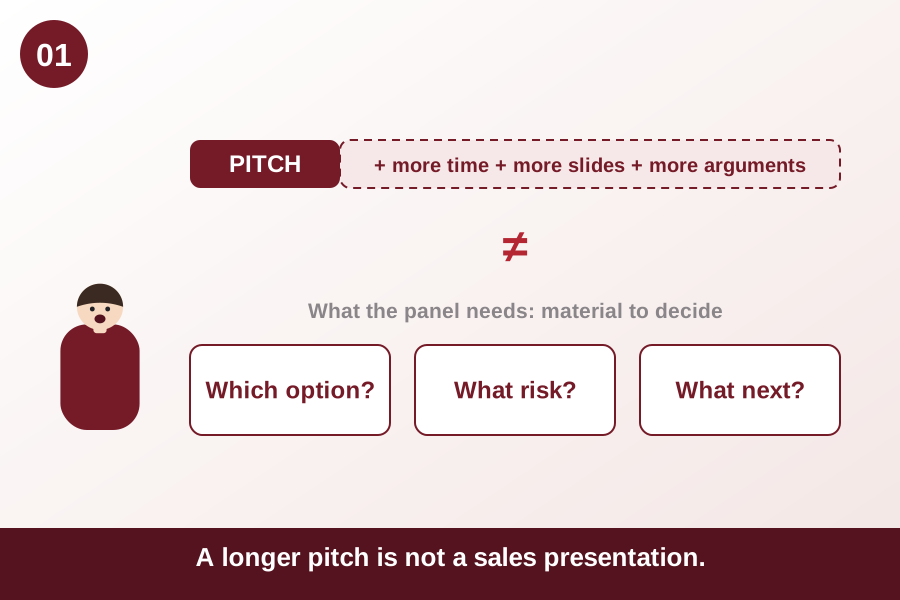
A longer pitch is not enough to help a client decide
Pitfall 01

Mistaking a sales presentation for a longer sales pitch

Lengthening your pitch adds time, slides and arguments. It does not necessarily meet the criteria of a panel that compares several options and weighs the risk of each. The client does not expect a longer talk; they need what it takes to make a choice.

Counter-measure

Identify the decisions the meeting must prepare. Organise demonstrations, evidence and discussion around those choices. Keep the pitch to open the client’s interest, then change logic.
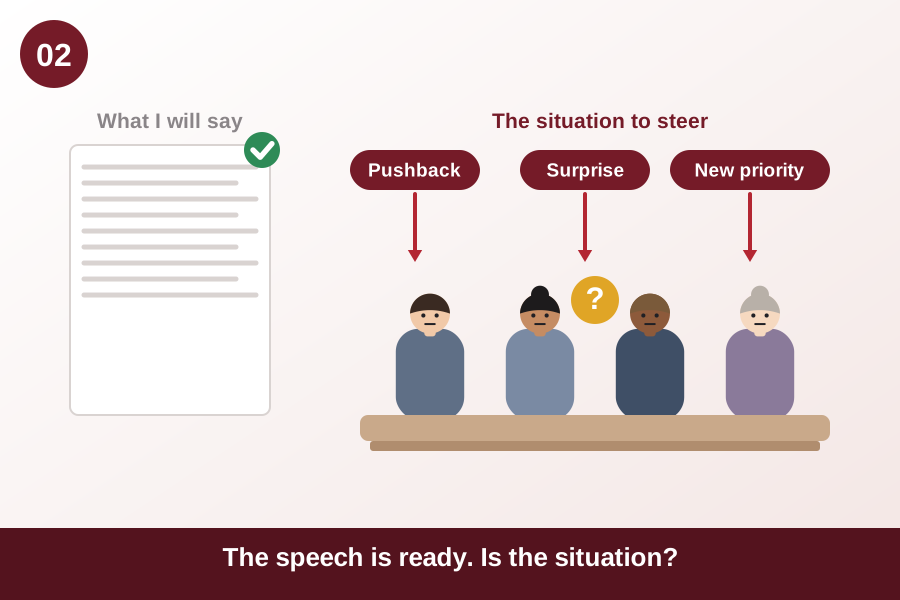
Prepare for the people, their interests and the scenarios of the meeting as well
Pitfall 02

Preparing what you will say rather than the situation you will have to steer

A flawless running order prepares neither for the panel’s disagreements, nor for an unexpected question, nor for a change of priorities. Under pressure, the temptation is then to defend your plan. Useful preparation also covers the people involved, their interests and the possible turning points.

Counter-measure

Map who is attending, who influences the decision and what each person might want to validate. Prepare scenarios for questions, risks and disagreements. Rehearse your ability to adjust course, not just to recite.

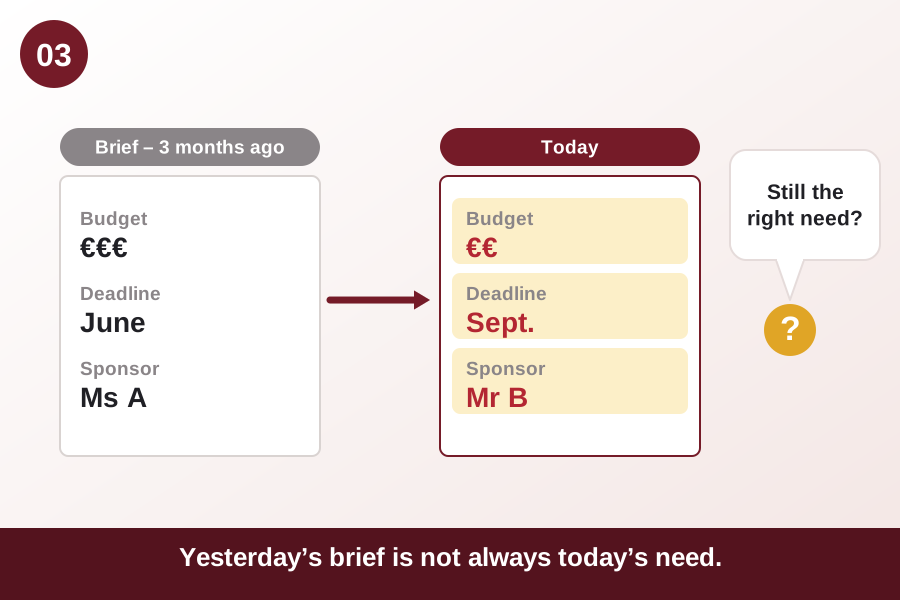
Client needs may have changed since the first brief
Pitfall 03

Assuming the need identified earlier is still exactly the right one

Between the needs discovery and the final presentation, a budget, a timetable or a decision-maker may change. Presenting the right answer to yesterday’s problem weakens a good offer. The meeting should therefore begin with a check, not with automatic trust in the old brief.

Counter-measure

Ask what has changed since your last exchanges. Have the client clarify which priorities are still open and which constraints are new. Recalibrate your examples and benefits before developing the solution.

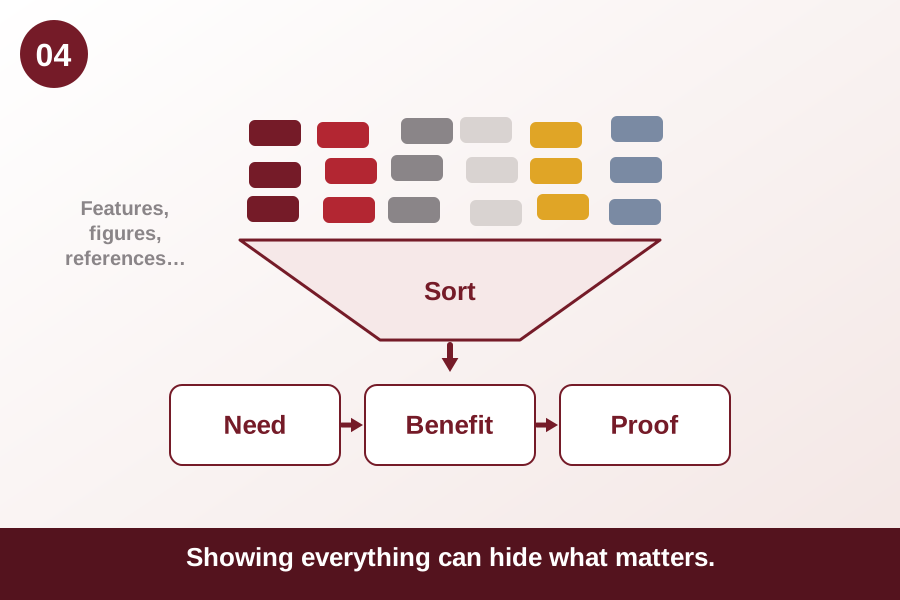
Sort the information that is available from the information that is useful to the decision
Pitfall 04

Trying to show everything to prove your worth

A pile-up of features, references and figures can overload attention. Raw information is increasingly easy to find; your value lies in sorting it and addressing the client’s concerns. Being exhaustive does not make you relevant.

Counter-measure

For each item, link a need to a benefit and then to a proof. Keep additional detail in reserve for questions. Give the panel the information it needs for its decision, at the moment it becomes useful.

Part 2 · The first minutes

Opening the sales situation badly

The opening sets a perspective, not just an atmosphere. An opening centred on the seller makes the client wait for their own issue to appear. Framing the discussion and making the proposal relevant straight away changes that dynamic.

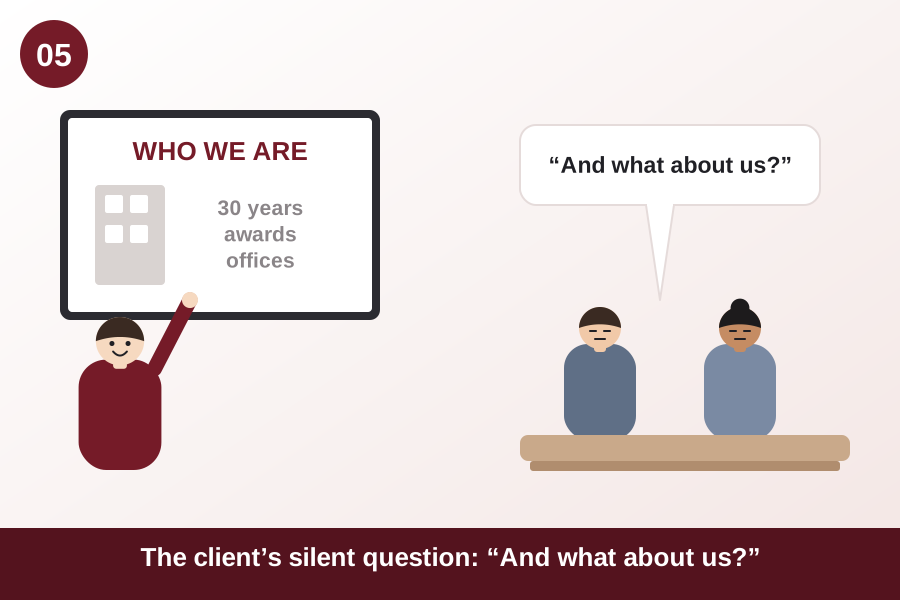
A team starts by talking about its own company while the client waits for their own issue to be addressed
Pitfall 05

Starting with yourself, your company and your references

The firm’s history, its awards and its map of offices can be useful. As an opener, they rarely answer the client’s silent question: ‘And what about us?’ References work better as evidence placed at the right moment.

Counter-measure

Start with the client’s issue as you understand it. Check it before developing your proposal. Bring in your experience when it directly sheds light on their situation or reduces a perceived risk.

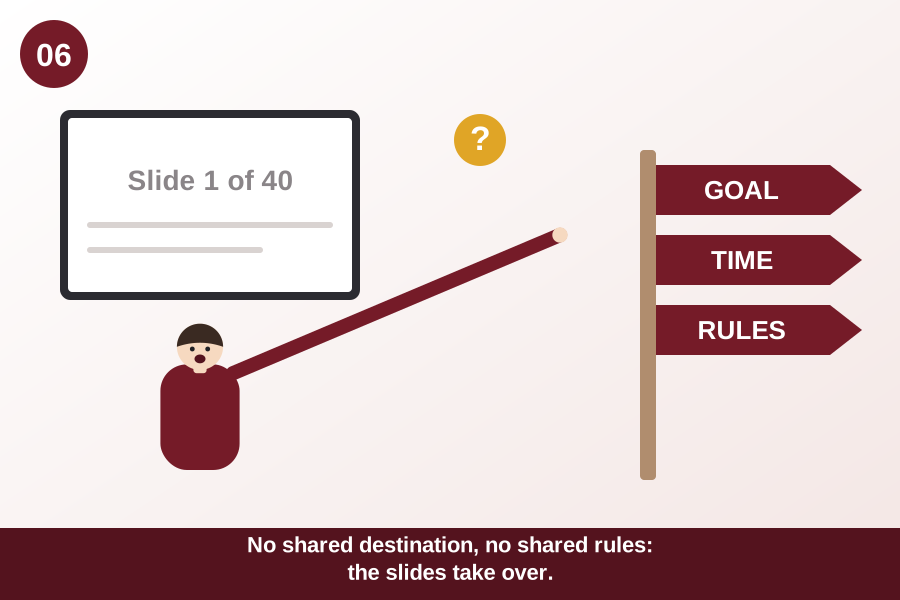
A presentation starts without a shared direction; the presenter should then frame the objective and the rules of the discussion
Pitfall 06

Getting into the content without framing the destination and the ground rules

If nobody knows where the meeting is heading, the slides take the place of the objective. Participants hesitate to speak or discover too late what is expected of them. Framing creates a shared path from the first minutes.

Counter-measure

State the objective, the time available and the points to be settled. Explicitly invite questions throughout the discussion. Agree what would count, at the end of the meeting, as useful progress.

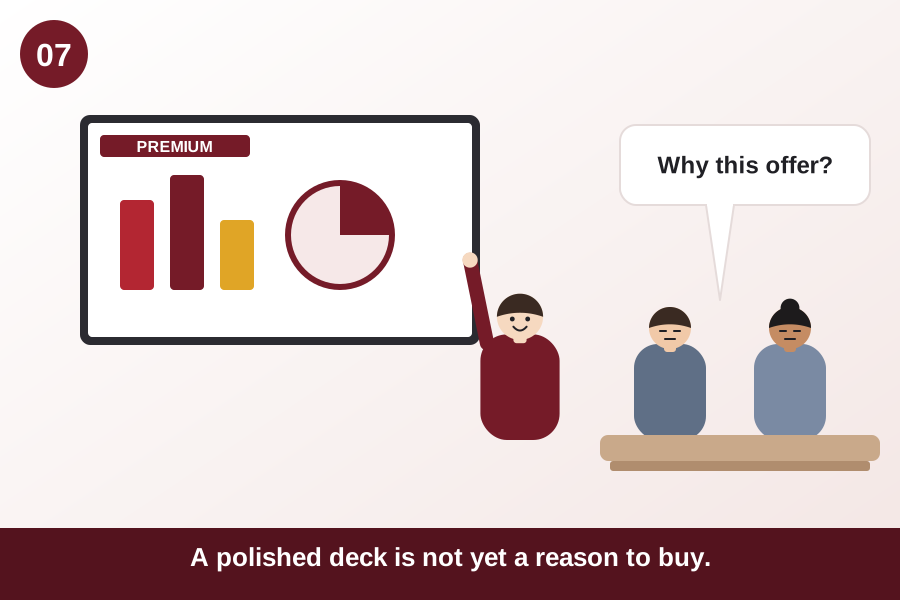
An attractive deck is not enough; the client asks why they should buy
Pitfall 07

Believing a professional-looking deck makes a presentation convincing

Careful design can aid understanding and inspire confidence. It demonstrates neither fit with the situation, nor value, nor control of the risks. A beautiful slide does not, on its own, answer ‘Why choose this offer?’

Counter-measure

Give every visual a precise role in the client’s reasoning. Link it to a benefit and to credible evidence. Let the discussion take precedence over the projection, even when the deck is excellent.

Part 3 · During the discussion

Turning the presentation into a tunnel

The client does not necessarily follow the path laid out in your slides. Their question may reveal a decision criterion, a risk or a disagreement that was invisible until then. Mastery means welcoming those signals and finding the useful thread again together.

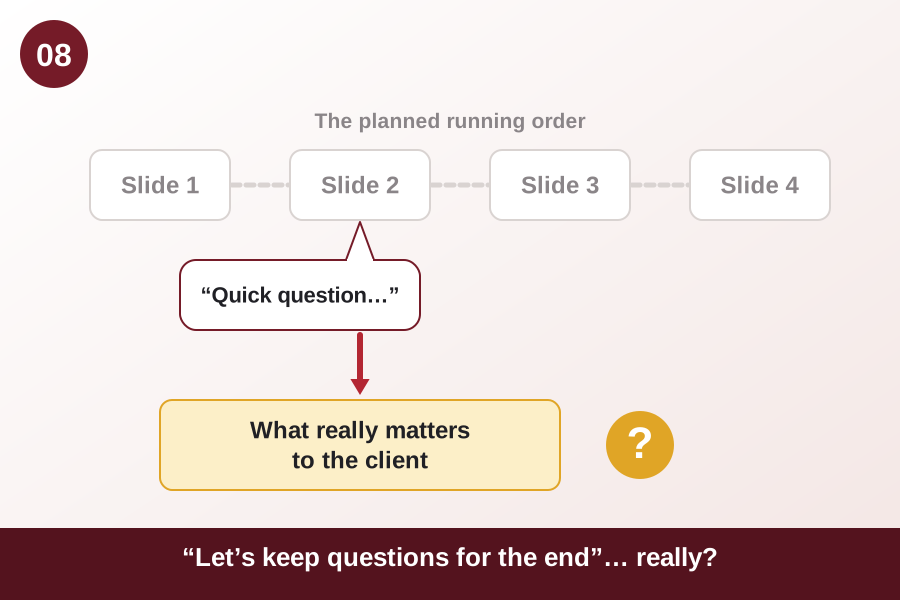
The client’s question may be the real thread of the decision
Pitfall 08

Clinging to the planned running order instead of following what becomes important to the client

The prepared plan reassures the presenter; a client’s question can suddenly throw them. Putting it off every time protects the running order but may lead away from the real subject of the decision. The important thread is not always the one on the slides.

Counter-measure

Welcome the question and look for what it reveals. Answer it, or explicitly agree when you will come back to it. Reorganise what follows around the criterion that has just emerged.

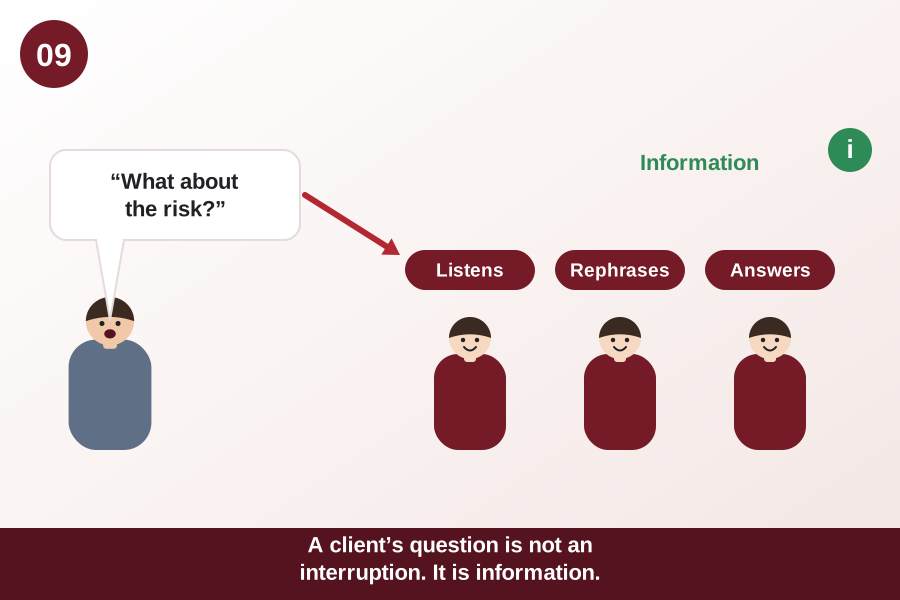
A client question triggers disorderly answers; the team then coordinates its response
Pitfall 09

Treating client interventions as disruptions

An interruption can complicate things for a team that has shared out roles and rehearsed its transitions. Treating it as an obstacle, however, cuts off a valuable source of information. A well-received question can make the panel’s real criteria visible.

Counter-measure

Plan who listens, who rephrases and who takes the answer, depending on the topic. Let the client finish before redistributing the floor. Use their intervention to adjust the route, not to defend your programme.

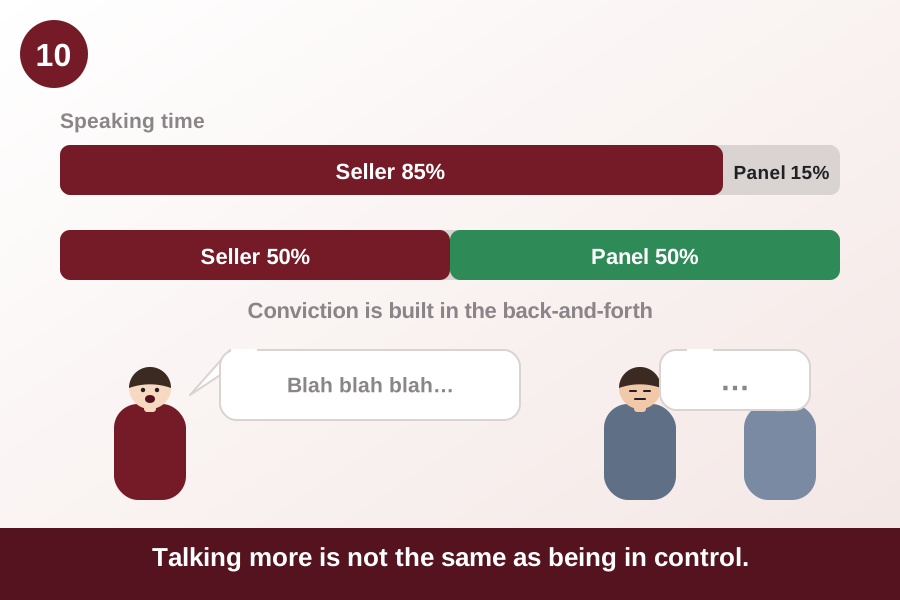
A seller monopolises the floor, then listens and brings the panel back in to build conviction together
Pitfall 10

Confusing speaking time with control of the situation

Speaking at length gives the impression of staying in charge. It can also stop the panel from voicing its reservations and building its own criteria. A silent room is not necessarily a convinced one.

Counter-measure

Explain one point, then stop to observe and listen. Follow up on the consequences for the client, rephrase their answer and adapt what follows. Conviction is built in the back-and-forth, not on the speaking clock.

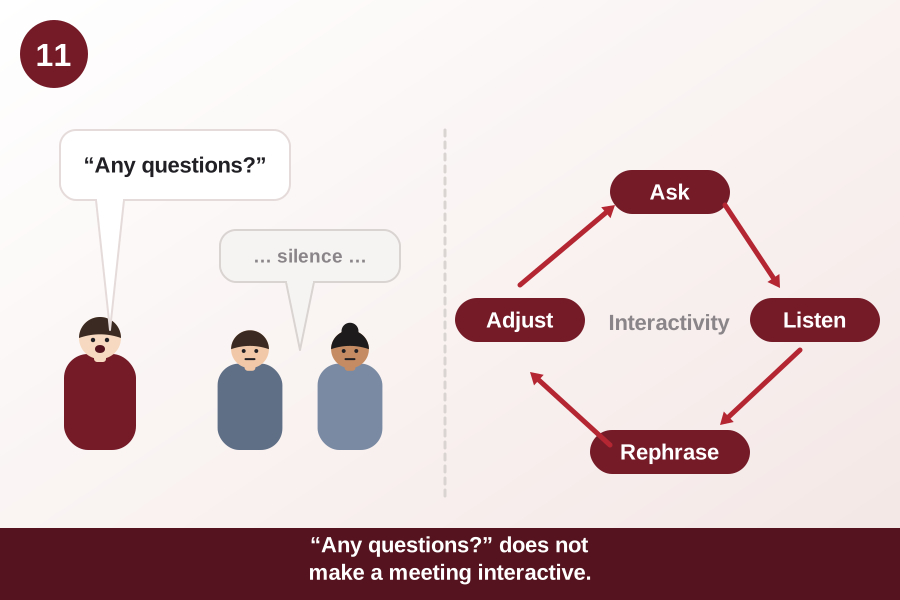
Asking whether there are questions is not enough; listening, rephrasing and adjusting create interactivity
Pitfall 11

Reducing interactivity to asking a few questions

‘Any questions?’ is not enough to create a real exchange, especially in front of several decision-makers. Silence can mask a misunderstanding, an unease or a disagreement between participants. Interactivity is a way of running the whole meeting.

Counter-measure

Ask questions that shed light on a concrete choice, then leave time to answer. Rephrase nuances and pass the floor around the panel. Adjust your examples and your pace to what you hear.

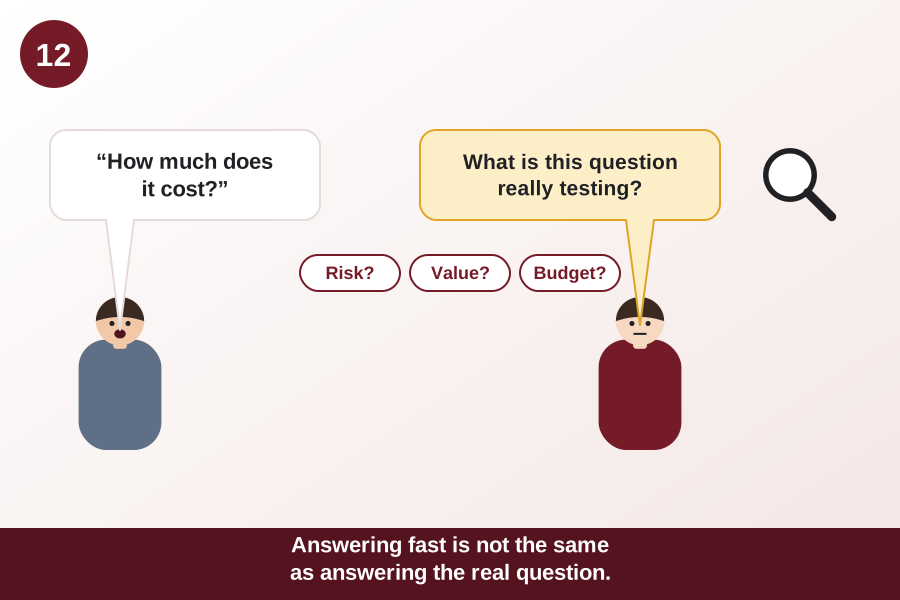
Before answering at once, the presenter clarifies what the client’s question is trying to test
Pitfall 12

Answering every client question immediately

A quick answer can be technically correct and commercially beside the point. A question about price, lead time or security is sometimes testing a wider risk. If you answer before understanding that test, you add information without lifting the worry.

Counter-measure

Ask for the context and the stake behind the question. Answer the real point, with suitable evidence. Then check whether the answer lets the client move forward.

Part 4 · Reading what is going on

Being blind to the reality of the panel

The words spoken do not contain the whole decision. You must also observe cross-reactions, roles, silences and influences, without claiming to read minds. This contextual reading helps you ask better questions.

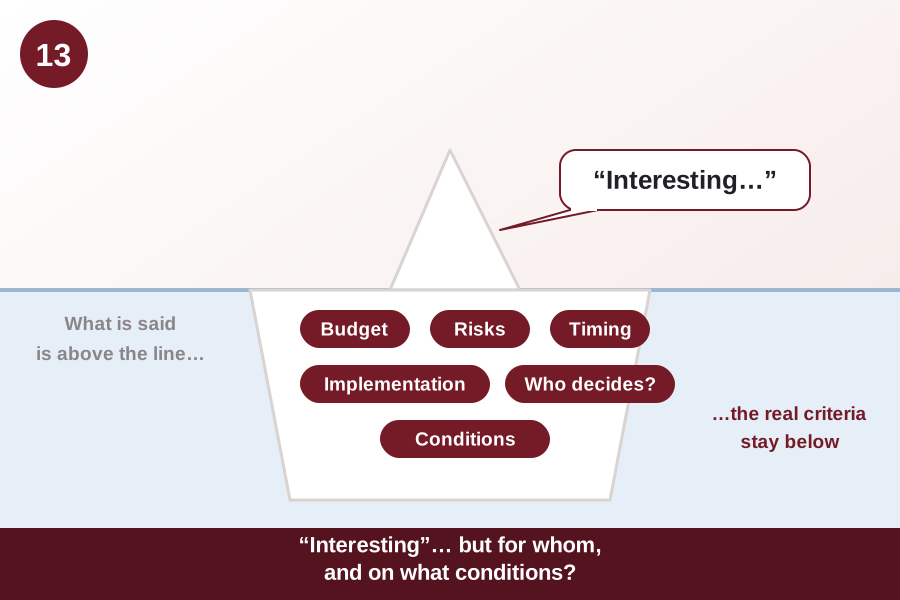
The client’s words are clues to clarify, not a complete description of their decision
Pitfall 13

Believing the client’s words tell you everything you need to know

Polite agreement can hide disagreement over budget, implementation or risk. A vague phrase such as ‘interesting’ does not say which criterion has actually been validated. Taking words literally sometimes avoids the very question that needed asking.

Counter-measure

Ask what the client takes away and what remains to be examined. Compare what is said with the facts and with the reactions of the whole panel. Have them clarify their decision criteria without attributing hidden intentions.

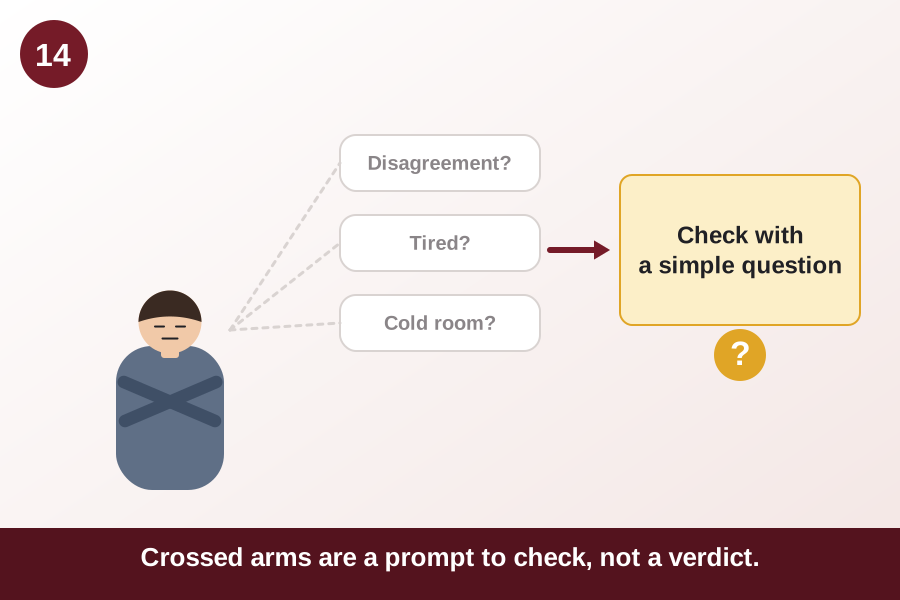
Crossed arms do not prove a refusal; the context and other signals must be checked
Pitfall 14

Reading isolated gestures as proof of what a person thinks

Crossed arms, a lowered gaze or a frown have several possible causes. Turning them into a verdict leads to answers that are sometimes misplaced. A body signal is an invitation to check, never stand-alone proof.

Counter-measure

Observe changes, their context and the other reactions. Stay open to several interpretations. Ask a simple question to check the point of concern instead of diagnosing the person.

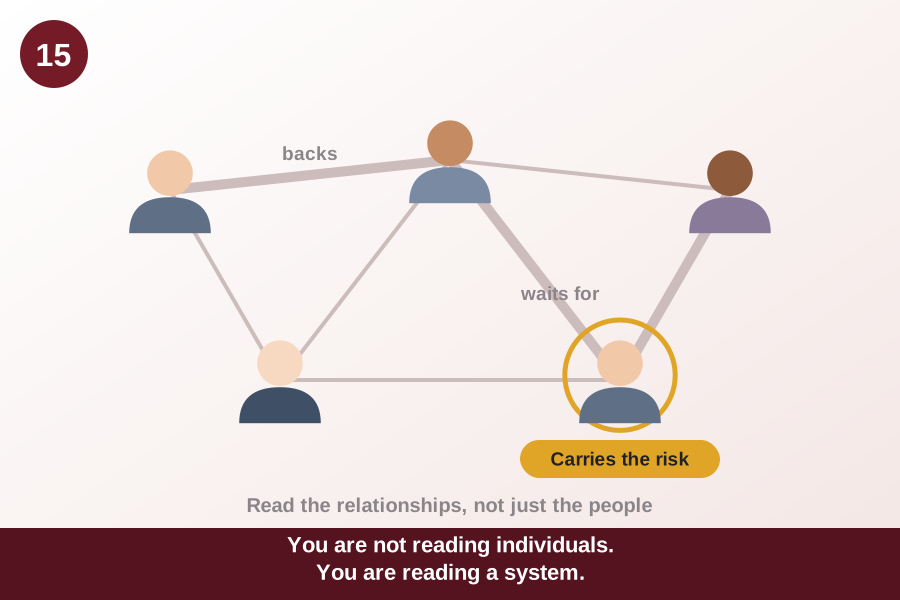
The seller observes not only each panel member but also the influences and relationships between them
Pitfall 15

Reading individuals without reading the relationship system

A panel is not a sum of independent individuals. Exchanged glances, hand-overs of the floor and silences sometimes signal alliances or reservations. Convincing a single contact is not enough if someone else will carry the risk of the decision.

Counter-measure

Spot who backs whom, who is waiting for whose opinion and who will have to implement the offer. Pass the floor around on the consequences for each function. Equip your supporters with arguments they can use after you have left.

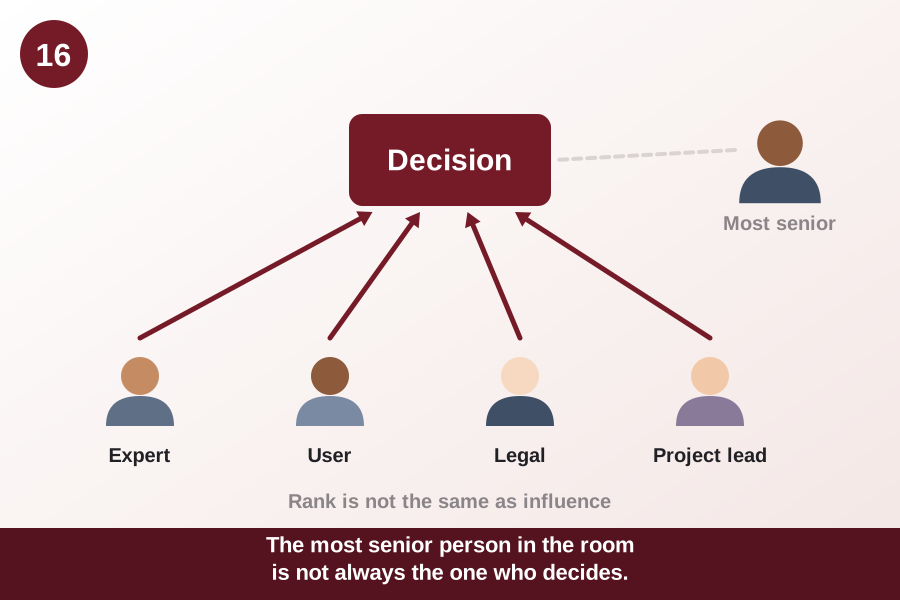
The most senior person is not necessarily the only influence on the decision
Pitfall 16

Confusing hierarchical power with real influence over the decision

The senior person in the room does not necessarily decide alone. A technical expert, a user, a legal lead or the future project manager can make an option acceptable – or not. Speaking only to the highest rank leaves decisive criteria in the shadows.

Counter-measure

Map the decision-maker, the recommender, the user and the guardian of risk. Address to each the evidence that matches their role. Also check who is missing from the meeting and will need to be convinced afterwards.

Part 5 · When the relationship tenses up

Mishandling resistance

An uncomfortable reaction is not necessarily an objection to be rebutted. It may be a request for clarification, a constraint, a fear or a test of reliability. The right diagnosis comes before the answer.

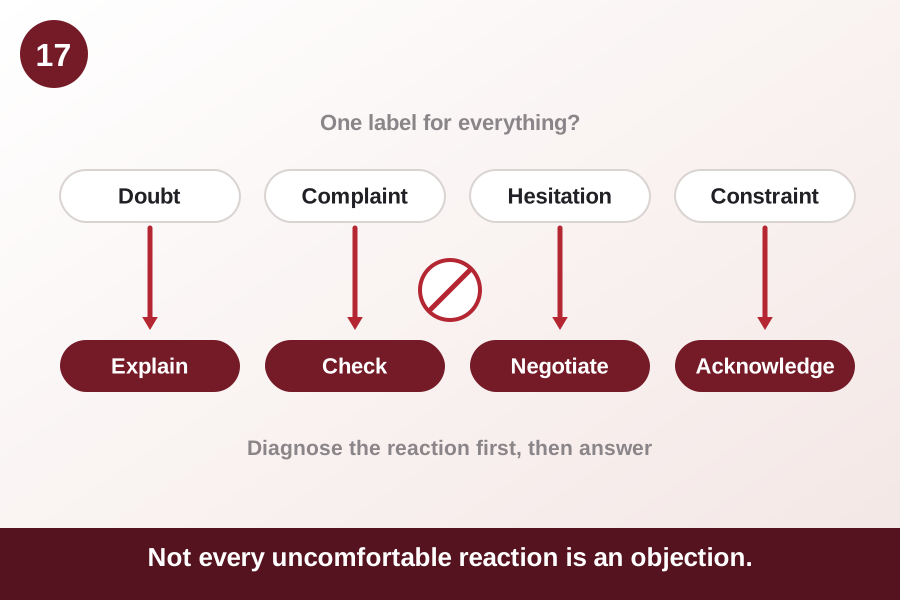
The presenter stops labelling every uncomfortable reaction as an objection and clarifies its nature
Pitfall 17

Calling every negative or uncomfortable client reaction an ‘objection’

A doubt, a complaint, a hesitation and a constraint do not call for the same answer. Treating them all as objections throws the presenter too quickly into defending their offer. The client may then feel challenged when they were looking to be understood.

Counter-measure

Have the point raised spelled out before you classify it. Distinguish what needs to be explained, checked, negotiated or simply acknowledged. Adapt your answer to the real nature of the reaction.

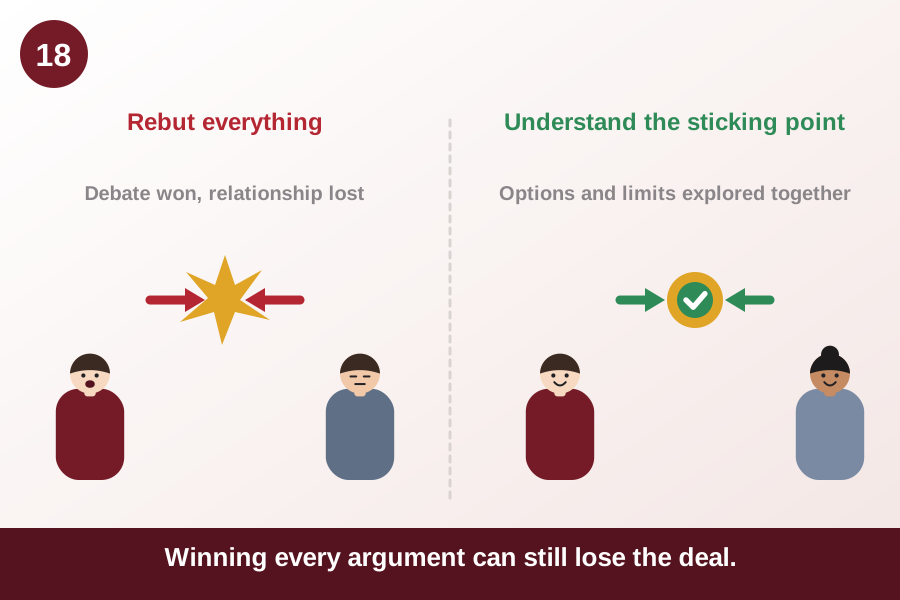
Rebutting every objection creates a confrontation; understanding the sticking point preserves the discussion
Pitfall 18

Trying to handle, rebut or make every objection disappear

Replying to each reservation soon turns the meeting into a debate to be won. Some limits are real and will not vanish with a well-turned phrase. The relationship is strengthened more by lucidity than by a string of counter-arguments.

Counter-measure

Rephrase the specific point and acknowledge what is valid in it. Assess with the client its consequences and your room for manoeuvre. Distinguish the reservation that can be dealt with from the criterion on which the offer is not suitable.

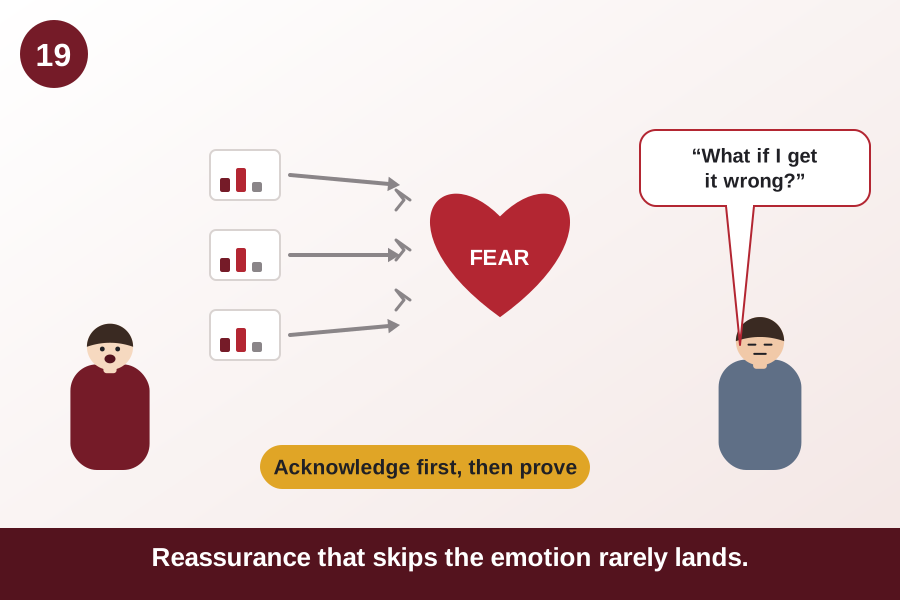
Before adding rational arguments, the seller acknowledges the worry that is holding the client back
Pitfall 19

Reassuring and arguing before acknowledging the emotional dimension

Accurate evidence can slide off a fear that has not been acknowledged. The client may dread getting it wrong, exposing their team or bearing the consequences alone. Speeding up the argument does not necessarily lower this perceived risk.

Counter-measure

Listen, and name the concern expressed in plain terms. Ask what would make the choice safe enough. Then bring guarantees and evidence on that specific risk.

Part 6 · Keeping room to manoeuvre without rigidity

Losing power by trying to keep control

Saying yes to everything can look flexible; locking down every minute can look reassuring. Yet both reflexes risk weakening the value of the offer and the quality of the relationship. Mastery means framing, questioning and negotiating deliberately.

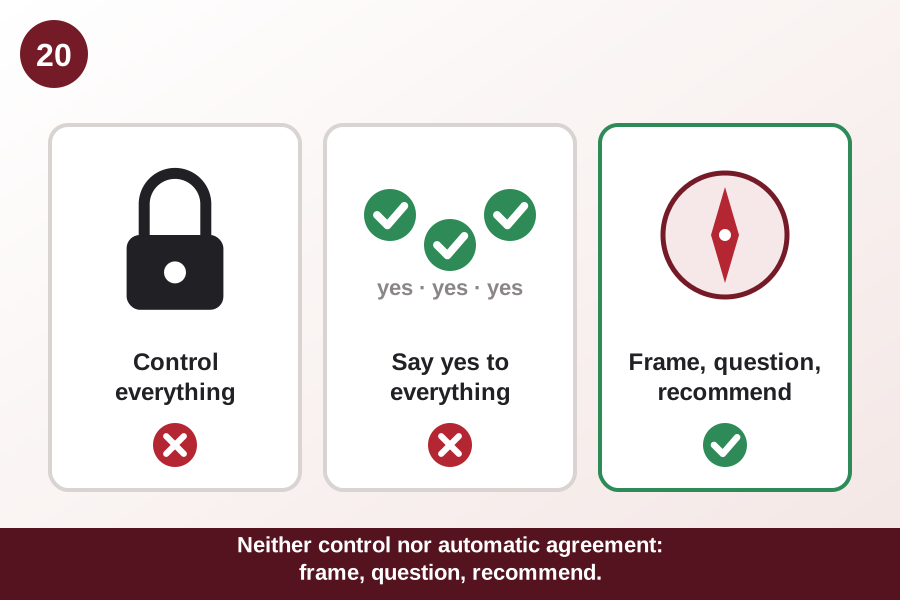
Instead of controlling everything or accepting everything, the seller frames, questions and recommends
Pitfall 20

Believing that to convince you must keep control and say yes to the client

Following your script at all costs closes the discussion; agreeing to every request weakens the proposal. Cooperation requires neither submission nor a tug-of-war. The client needs a counterpart who listens and also exercises judgement.

Counter-measure

Clarify the request and its consequences before committing. Set a frame for what is possible, conditional or inadvisable. Recommend frankly the route that is most useful to the client.

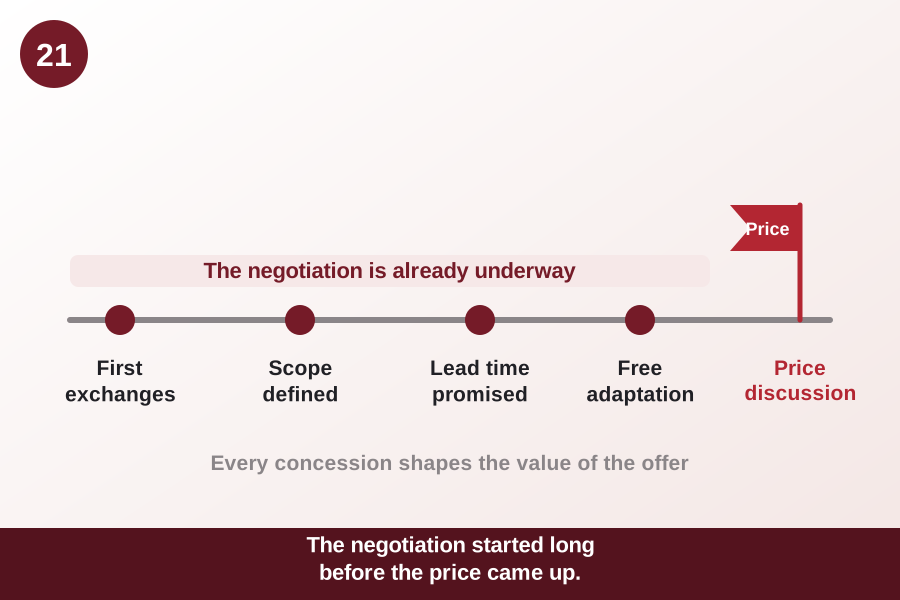
Negotiation starts well before the price, with the first exchanges on value and concessions
Pitfall 21

Failing to see that the negotiation has already begun

Negotiation does not begin when the client asks for a discount. It progresses when you define the scope, promise a lead time or accept an adaptation without anything in return. Every exchange shapes the idea of value and future room to manoeuvre.

Counter-measure

Spot the requests that change the scope, the risk or the effort. Restate their implications before replying. Tie any concession to a clear condition and to the value it preserves.

Part 7 · Leaving the meeting

Ending without turning the presentation into a decision

A panel can understand an offer, enjoy the meeting and leave without committing. These are three distinct states that the room’s enthusiasm can blur. A useful conclusion checks what has been secured and organises the next decision.

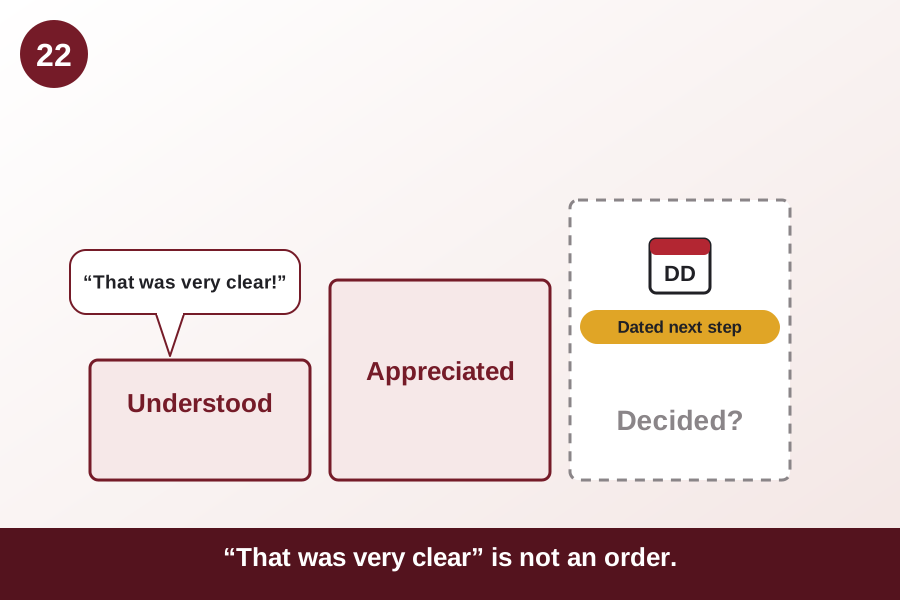
A client understands, then appreciates the offer, but the decision only moves forward with an explicit next step
Pitfall 22

Confusing understanding, satisfaction and decision

‘That was very clear’ is welcome feedback, not an order. The final choice may still depend on technical, political, budgetary, timing or legal factors. Closing on a smile without clarifying what comes next leaves the decision out of reach.

Counter-measure

Ask what is validated, what remains open and who will take part in the final decision. Agree a dated next step, with an owner and a deliverable. After the meeting, assess your presentation on observable facts, without automatically blaming the client or your own performance for the outcome.

The guiding principle

A sales presentation is not a performance

It helps a client understand, evaluate, compare, reduce their risk and move towards a decision. That takes preparation, evidence, listening and the ability to change course when the situation demands it. Working with your team turns these 22 pitfalls into professional habits suited to your sales.

From reading to practice

Let’s prepare your next high-stakes presentation

The same mistake does not show up in the same way in a tender presentation, a complex offer or a key-account meeting. Patrick JAY works with your sales teams starting from their own documents, their own counterparts and the decisions they need to win. The work deals with real situations, not an abstract stage performance.

  • Coaching for a decisive sales presentation.
  • Workshop on an existing presentation or tender defence.
  • Training for teams presenting to clients.

Face-Client is a department of PatrickJAYCommunications. The format adapts to your context, in person or remotely. The aim stays the same: to make your presentations more useful to the client’s decision.