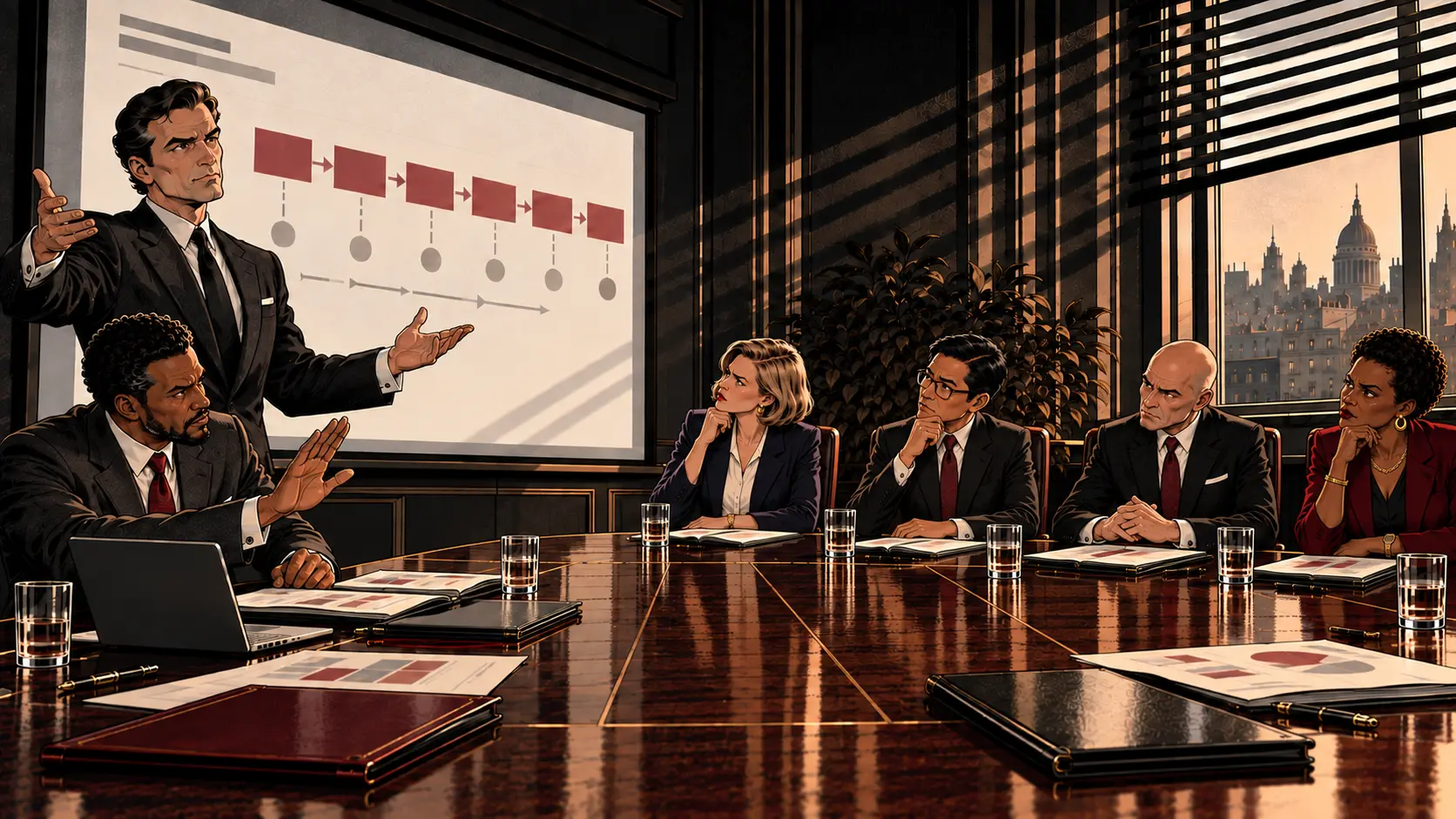
In the meeting room at Althéa Solutions, nobody speaks.
The message is four lines long:
Thank you for the quality of your proposal and your presentation. After analysing all the criteria, we have chosen another candidate.
Nine months of work have just collapsed.
The Novaxis contract was worth €11.8 million over four years. It covered the rollout of a digital platform across eleven hospitals.
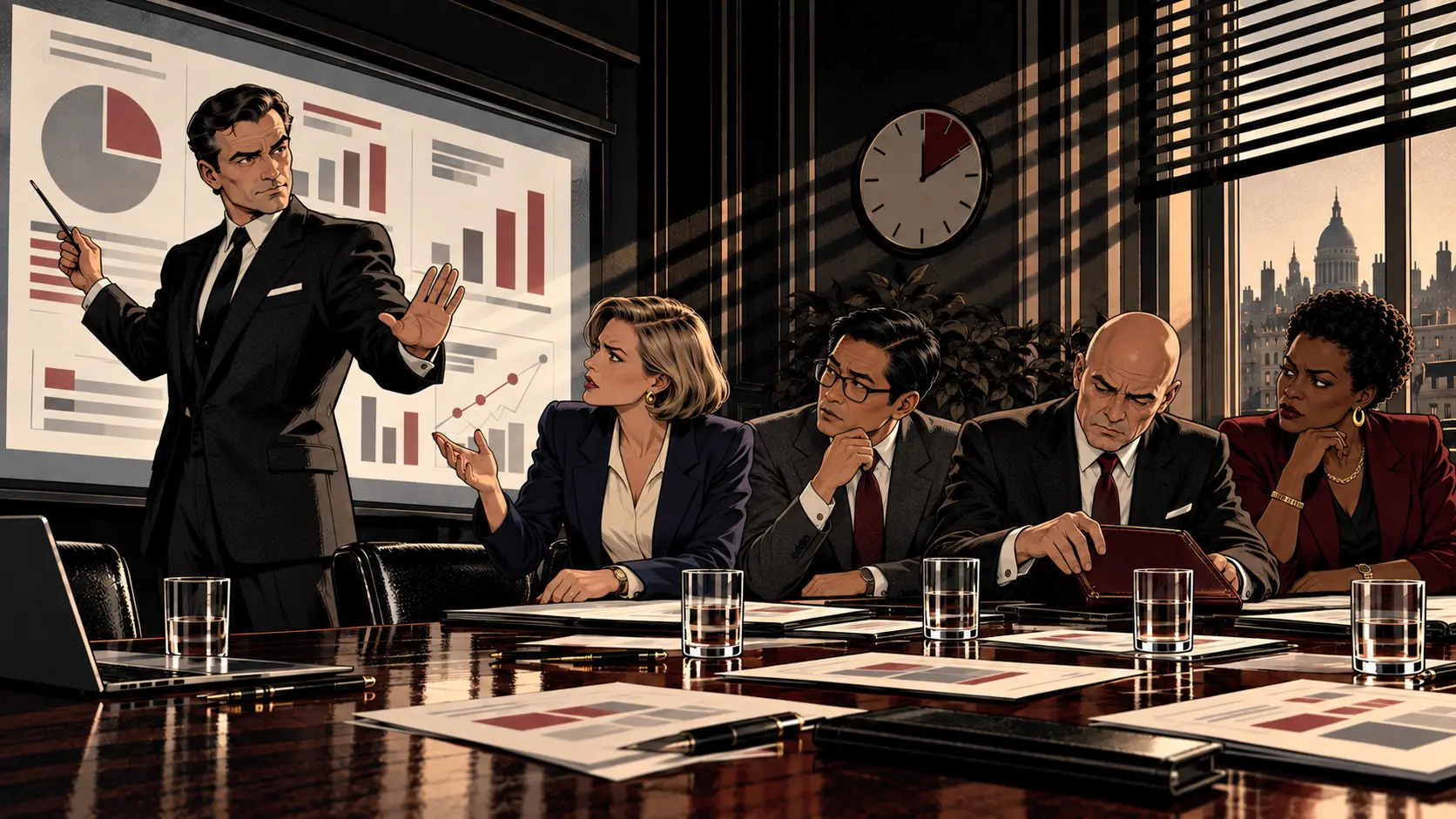
Althéa had cleared every stage of the selection. Its technical offer was solid. Its references were well regarded. A few days earlier, its team had defended its proposal in front of the eight members of the decision committee.
At the end of the presentation, the committee chair had even said:
‘Thank you. That was very clear.’
Vincent Maral, the sales director, had taken that sentence as an excellent sign.
He was wrong.
THE BREAK-IN
Tuesday, 7.12 am.
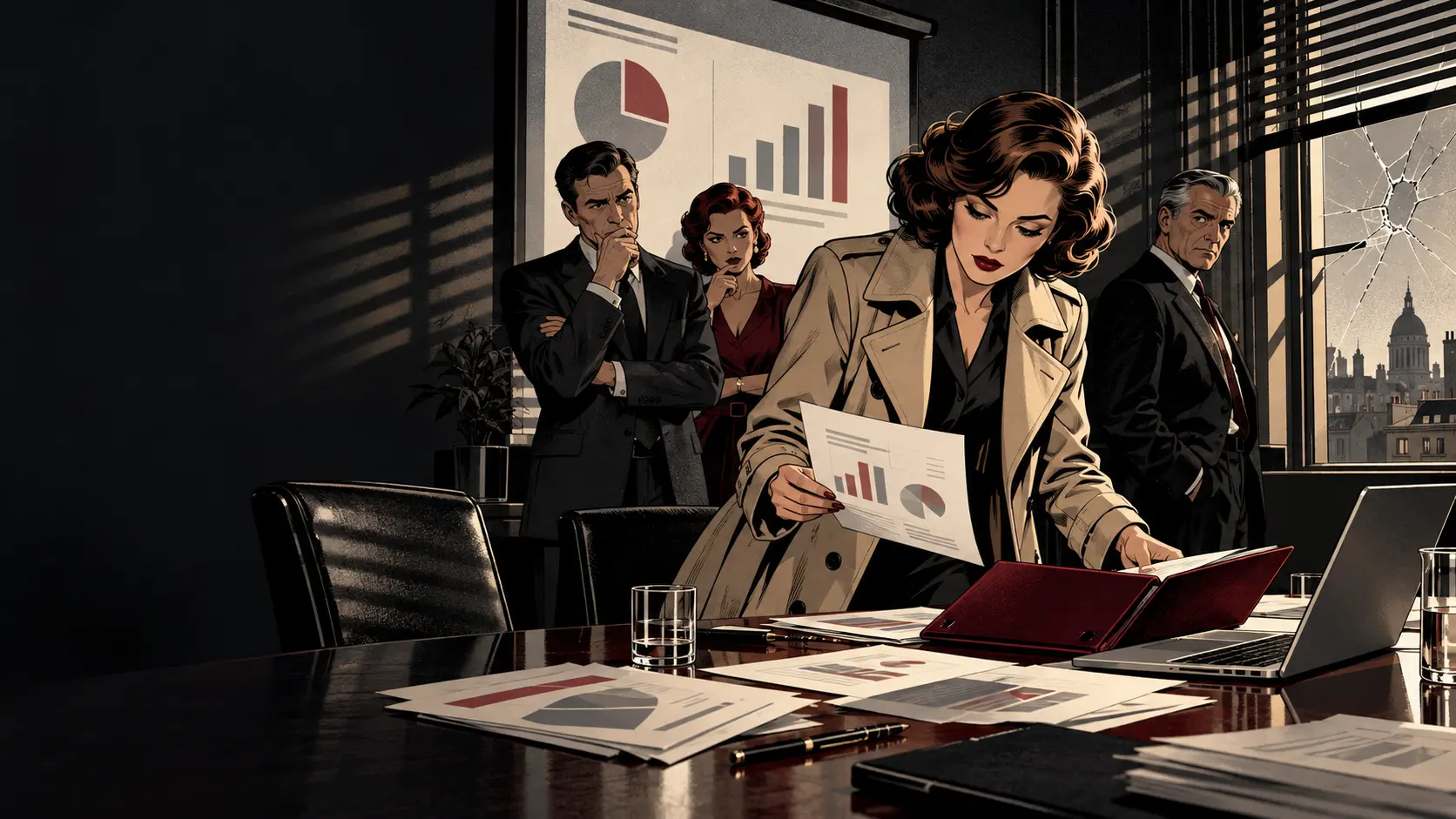
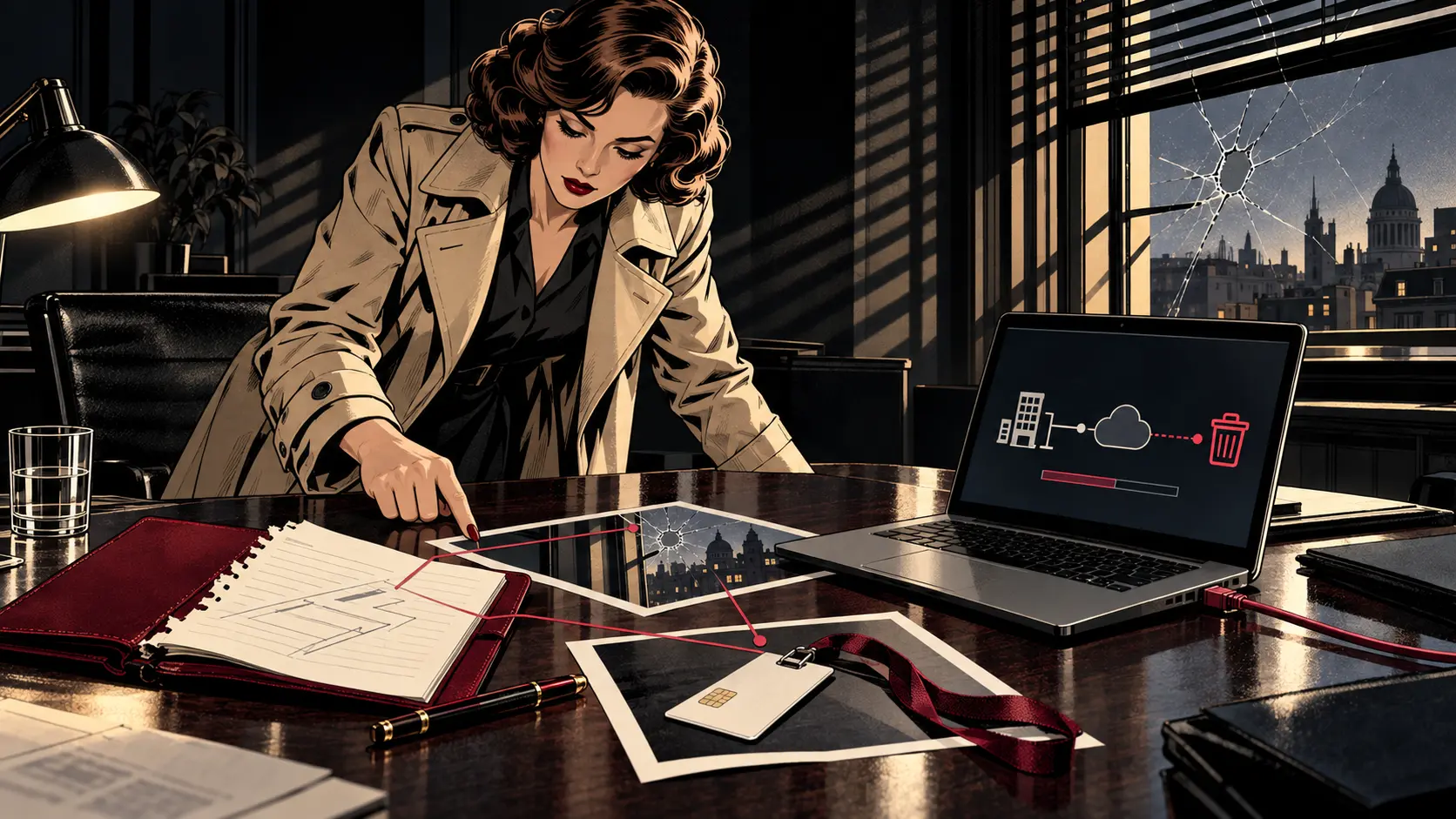
A cleaner discovers a broken window in Althéa’s offices.
Only one room has been searched: the room where the team had prepared the Novaxis presentation.
Three items have disappeared:
the laptop used during rehearsals;
a USB drive containing the different versions of the presentation;
the red notebook belonging to Inès Perrin, the bid manager.
Nothing else was taken.
The screens, the phones and the neighbouring computers are all still there.
Vincent calls the police immediately.
When Commander Hélène Sorel arrives, he sets out his theory:
‘Someone passed our proposal to the competitor. They knew our arguments, our prices and our strategy. This break-in proves it.’
‘The contract was awarded last night?’
‘Yes.’
‘And the theft took place this morning?’
‘Yes.’
Hélène looks at the broken window, then at the almost untouched room.
‘Why steal a presentation after the contract has been awarded?’
Vincent does not answer immediately.
‘To wipe out the traces of the leak,’ he finally says.
The commander notes down the answer.
She does not comment on it.
THE INVESTIGATOR
Commander Hélène Sorel
Hélène knows little about complex tenders. What she does know is stories built to divert attention.
She always applies the same method:
separate facts from interpretations;
reconstruct the timeline precisely;
look for contradictions;
ask who benefits from the explanation on offer.
She asks to see every saved version of the presentation, the preparation emails and the recording of the presentation made by Novaxis.
‘We are investigating a burglary,’ Vincent says in surprise.
‘Perhaps. But someone decided your rehearsals and your notes were worth stealing. I want to understand why.’
THE SUSPECTS
Vincent Maral – The sales director
He led the presentation.
Charismatic, experienced and very self-assured, he believes a successful presentation must be fluid, impressive and perfectly controlled.
He refuses to consider that his team may have lost the contract in the room.
In his view, the decision was political, or the competitor had confidential information.
Inès Perrin – The bid manager
She coordinated the response for nine months.
She knows the specification, the contractual commitments and the concerns the client expressed.
Several of her slides were deleted the day before the presentation.
Her red notebook contains her preparation notes. It is one of the three stolen items.
Malik Ouattara – The technical director
He was due to answer questions on data migration and service continuity.
During the presentation, Vincent cut him off twice.
As they left, several witnesses heard him say:
‘You committed the company to something we do not know how to deliver.’
Laurent Chabert – The managing director
The Novaxis contract was meant to secure a significant part of next year’s revenue.
Losing it weakens the company and could lead to job cuts.
Laurent had asked for an aggressive presentation. He expected a win.
Since the result was announced, he has demanded to know what really happened.
ACT I – A PERFECTLY PREPARED PRESENTATION
Hélène begins by studying the programme of the presentation.
Everything had been timed:
five minutes to introduce Althéa;
ten minutes for its references;
fifteen minutes for the solution;
fifteen minutes for the methodology;
ten minutes for the timetable;
ten minutes for the commitments;
fifteen minutes for questions.
The deck had seventy-two slides.
Every transition had been rehearsed.
Every speaker knew their lines.
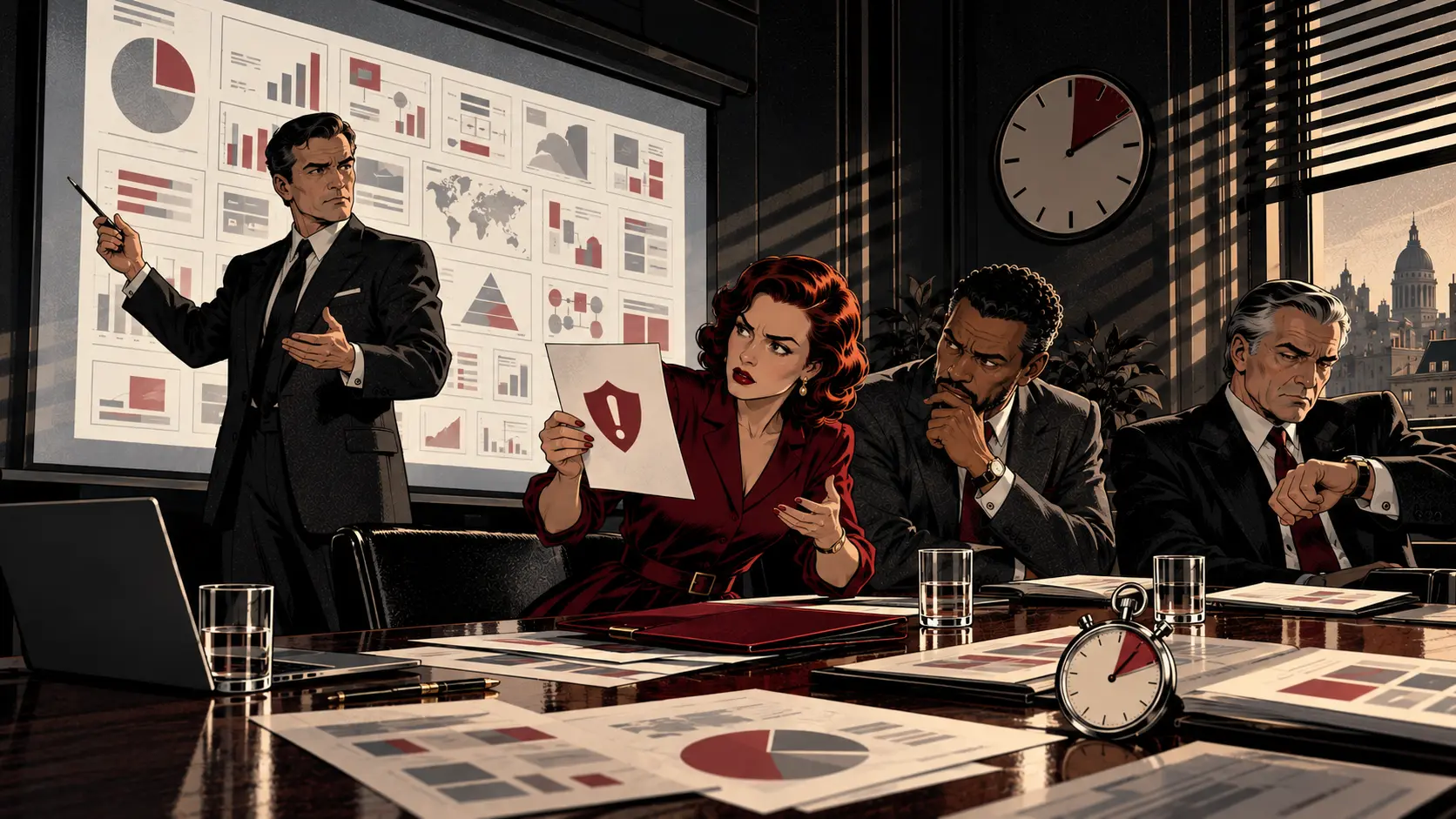
A stopwatch sat in the middle of the table during rehearsals.
In a video saved on the server, Vincent interrupts Malik:
‘You’re forty seconds over. You need to cut it.’
Then he turns to Inès:
‘You’re next. You come in as soon as the curve appears.’
Hélène stops the recording.
‘You had prepared exactly what you were going to say.’
‘Absolutely,’ Vincent replies.
‘But had you prepared what might happen in the room?’
‘We had anticipated the questions.’
‘All of them?’
‘The main ones.’
‘Disagreements between the panel members? A change of priority? A worry that is not put into words directly? A request that forces you to change your running order?’
Vincent stiffens.
‘You can’t foresee everything.’
‘No. But you can prepare your ability to adapt.’
First clue
The burglar did not steal the technical offer or the financial documents.
He took the items that would allow someone to analyse how the presentation was prepared and run.
ACT II – THE NEED HAD CHANGED
The original specification placed the emphasis mainly on three objectives:
reducing costs;
harmonising tools;
simplifying the administration of the system.
But a fortnight before the presentation, an IT incident had paralysed one of Novaxis’s sites for nine hours.
Since that incident, service continuity and a secure migration had become the priorities.
Inès had received the information.
She had flagged it during the final rehearsal.
On the recording, she hands Vincent a document:
‘We need to rework the opening. Their number one issue is no longer harmonisation. It’s the risk of interruption.’
Vincent checks the clock.
‘The official need is in the specification.’
‘The context has changed.’
‘We are not rebuilding seventy-two slides forty-eight hours before the presentation.’
‘We don’t need to rebuild everything. At the very least we should start by checking their priorities.’
‘If we start by questioning them, we’ll never have time to present our offer.’
The presentation stays unchanged.
On Friday morning, the team walks into the committee room without asking what has changed since the last exchanges.
It presents a very complete answer to yesterday’s problem.
ACT III – THE QUESTION THAT COULDN’T WAIT
Nineteen minutes into the presentation, Vincent is still presenting Althéa’s references.
On the screen appear offices, awards and several major projects.
Novaxis’s operations director interrupts him:
‘How do you guarantee service continuity during the migration?’
Vincent smiles.
He raises a hand slightly.
‘We plan to cover the technical aspects in a few minutes. If you don’t mind, I’ll finish this section quickly.’
He goes back to his running order.
Hélène replays the sequence.
‘Why did you put off the answer?’
‘It was coming too early.’
‘Too early for whom?’
‘For the logic of our presentation.’
‘But perhaps exactly the right moment for the logic of her decision.’
Vincent does not answer.
The question was not only about a technical procedure.
The operations director wanted to know who would carry the responsibility if the system became unavailable.
Vincent had protected his slides.
He had left the risk unanswered.
ACT IV – WHAT THE PANEL WASN’T SAYING
After Vincent’s answer, the operations director leans towards the cybersecurity manager.
They exchange a few words.
The procurement director closes the file in front of him.
The legal manager stops taking notes.
‘That’s where we lost them,’ Inès asserts.
Hélène stops her.
‘You don’t know that.’
‘Look at their reactions.’
‘I am looking at them. But a single gesture is not proof. The procurement director may close his file because he has understood, because he disagrees, or simply because he wants to listen. What did you do to check?’
‘Nothing.’
‘So you saw signals, but you asked no questions.’
The team had observed individuals without reading the relationship system.
It had not noticed that the operations director systematically consulted the cybersecurity manager before answering.
It had not identified that the legal manager spoke little, but rephrased the risks for the committee chair.
It had mainly looked at Novaxis’s managing director, because he held the most senior position.
Apparent power had captured its attention.
Real influence was flowing elsewhere.
ACT V – THE OBJECTION THAT WASN’T ONE
Later, the operations director comes back to the subject:
‘I don’t want my teams to bear alone the consequences of a migration that goes too fast.’
Vincent immediately identifies an objection.
He replies:
‘I understand your concern, but we have already run more complex projects. Our teams are thoroughly seasoned.’
‘That’s not exactly my question.’
‘We can send you all our references.’
‘I am not questioning your references.’
‘Our methodology also provides enhanced support.’
The more Vincent argues, the less he answers.
The operations director was not trying to challenge Althéa’s competence.
She was voicing a personal and organisational fear: becoming solely responsible for an incident affecting eleven sites.
Vincent could have asked:
‘What guarantees and what sharing of responsibility would allow you to consider the migration safe enough?’
He does not.
He tries to make the objection disappear.
The client is trying to have the risk acknowledged.
ACT VI – THE PROMISE TOO FAR
The procurement director then asks a direct question:
‘Can you cut the migration from ten weeks to six?’
Malik opens his file.
He knows the technical answer.
Six weeks remain possible, but only with:
extra mobilisation of the teams;
accelerated approvals from the client;
a phased rollout;
a change to the price;
a different contractual allocation of risk.
Before he can answer, Vincent speaks:
‘Yes. We will be able to adapt.’
Malik steps in:
‘Subject to checking…’
Vincent cuts him off:
‘Our teams have experience of these situations.’
The procurement director continues:
‘So you confirm six weeks with no change to the price?’
‘We confirm it.’
Malik stares at Vincent.
The operations director looks at Malik.
The legal manager writes something down.
In under thirty seconds, Vincent has:
committed the company without clarifying the request;
cut the timeline by 40%;
increased operational risk;
given away negotiating room;
publicly contradicted his expert;
undermined the credibility of the whole team.
The incident later leads to a row in the corridor.
‘You’ve just promised the impossible,’ says Malik.
‘I answered the client.’
‘You told him what he wanted to hear.’
‘That’s my job.’
‘No. Your job was to let him decide with full knowledge of the facts.’
Several people witness the exchange.
Malik immediately becomes a credible suspect.
ACT VII – ‘THAT WAS VERY CLEAR’
At the end of the presentation, the committee chair closes her file.
‘Thank you. That was very clear.’
Vincent smiles.
‘Excellent. We naturally remain available if you need any further information.’
He puts away his remote.
The meeting ends there.
Nobody asks:
what the committee considers validated;
what remains uncertain;
which risks still have to be lifted;
who will take part in the final decision;
how the candidates will be ranked;
what next step could be arranged.
The team leaves the room with a favourable impression.
But ‘very clear’ only means that the presentation was understood.
It does not mean the offer is preferred.
It does not mean the risks have been lifted.
It does not mean the client is ready to decide in Althéa’s favour.
Three days later, the contract is lost.
The next morning, the preparation room is burgled.
HAVE YOU WORKED IT OUT?
Before going further, go back over the facts.
What the burglar took
the laptop containing the rehearsals;
the different versions of the presentation;
the red notebook in which Inès had recorded her warnings.
What he left
the complete technical offer;
the financial documents;
the contracts;
the other computers;
every item that would be easy to resell.
The decisive questions
Why steal the documents after the contract has been awarded?
Why remove only the items that would allow the presentation to be analysed?
Who really benefits from their disappearance?
Who had an interest in making people believe the win had been stolen, rather than examining how the team had presented its offer?
THE CULPRIT REVEALED
The security data allows Hélène to reconstruct the facts.
At 6.43 am, the alarm was deactivated with a temporary badge.
At 6.49 am, the window was broken.
So the glass was not used to get into the premises. It was broken after the system had been disarmed, in order to fabricate a burglary scene.
At 7.02 am, the supposedly stolen laptop still connects to Althéa’s internal network.
A remote deletion of the rehearsal videos is launched from a session authenticated with Vincent’s credentials.
The temporary badge had been prepared several weeks earlier for a consultant whose visit had been cancelled.
Vincent had the authority to collect it.
He thought he was avoiding having his personal badge recorded.
He had not foreseen that the system would keep the identity of the manager who approved its issue.
The automatic backups, for their part, had not been entirely deleted.
Hélène summons Vincent.
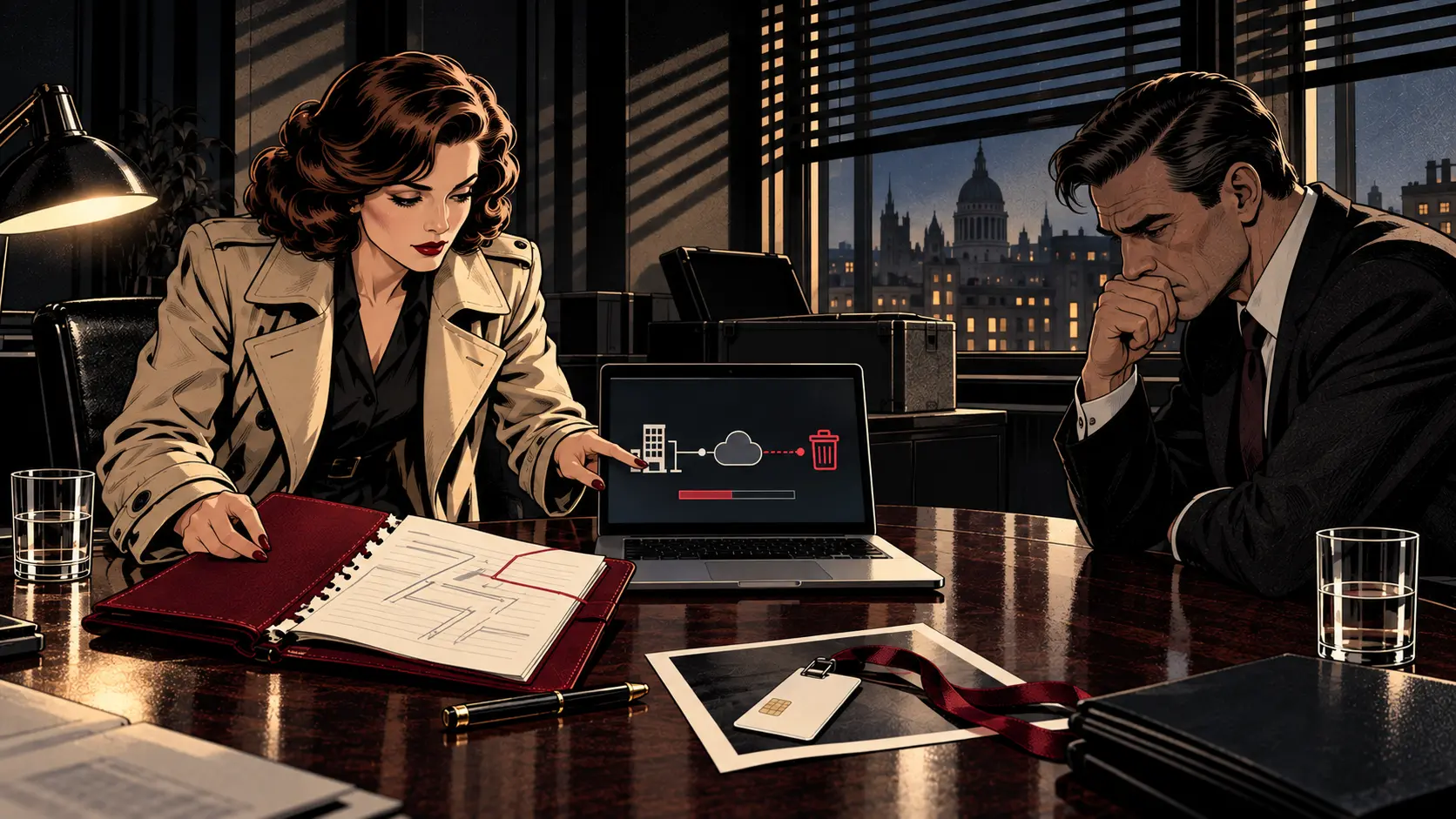
On the table, she lays out:
the laptop recovered from a storage unit;
Inès’s red notebook;
the temporary badge;
the network connection log;
a copy of the final rehearsal.
‘You did not discover any leak,’ she says.
Vincent stays silent.
‘You organised the burglary after the defeat.’
‘You don’t understand the pressure we were under.’
‘What I understand is that you wanted to impose a different explanation.’
He looks at the notebook.
On one of the pages, a sentence is underlined:
Six weeks impossible without conditions. Do not accept in the room.
‘The managing director wanted someone to blame,’ Vincent goes on.
‘You offered him one: the competitor.’
‘We had the best offer.’
‘Perhaps. But that is not the same as having given the best presentation.’
Vincent finally admits the facts.
After the defeat was announced, Laurent had decided to have the presentation analysed.
The videos, the successive versions and Inès’s notebook would have shown that several members of the team had warned Vincent before the meeting.
He risked losing his job and the promotion that had been promised him.
He needed a story stronger than that of a badly run presentation.
An unfair competitor.
A leak.
A burglary.
A stolen victory.
THE FINAL TWIST
The investigation proves that the burglary was staged.
It does not prove, however, that the poor presentation alone explains the loss of the contract.
A few days later, Novaxis sends its evaluation report.
Althéa’s offer also had two objective weaknesses:
a price 6% higher than the chosen bidder’s;
a contractual structure judged less protective for the client.
So the presentation was not the sole cause of the defeat.
But it did not allow Althéa to defend its price gap, reduce the perceived risks or make its contractual structure more acceptable.
The six-week promise even had the opposite effect: the committee doubted how well the project was truly under control.
Hélène closes the file.
‘You did not necessarily lose the contract in that room. But you did not give the client enough reasons to choose you there.’
This time, nobody answers.
COMMERCIAL AUTOPSY OF THE PRESENTATION
The burglary belongs to detective fiction.
The presentation mistakes, however, are perfectly realistic.
Observed fact
Commercial consequence
Counter-measure
The team prepares its speech rather than the situation
It does not know how to react when the meeting changes course
Prepare the people involved, the risks, the questions and the possible turning points
The original need is not revalidated
The offer answers yesterday’s problem
Ask what has changed before developing the solution
The presentation starts with the company
The client has to wait before understanding what concerns them
Start with their situation, their issues and the decisions to prepare
The essential question is put off
The presenter protects the plan at the expense of the decisive criterion
Welcome the question and work out straight away what it reveals
The panel’s reactions are not checked
Signals are seen, but remain interpreted or ignored
Observe, then ask a verification question
The team mainly looks at the most senior person
The people who really carry the risk are not involved
Map decision, influence, use and responsibility
A worry is treated as an objection
The client feels challenged rather than understood
Have the nature of the reaction spelled out before arguing
Vincent answers immediately
He gives an answer before understanding the stake
Question, rephrase, answer, then check
A shorter timeline is accepted unconditionally
The company loses value, margin and credibility
Assess the consequences and negotiate something in return
The experts contradict each other in front of the client
The panel doubts the reliability of the commitment
Share out the roles and prepare the coordination of answers
‘Very clear’ is interpreted as agreement
Satisfaction is confused with decision
Clarify what is validated and obtain a concrete next step
The loss is immediately blamed on outside factors
The team gives up learning from the situation
Assess the facts within your control without making the client an automatic culprit
MATCHING THE 22 PITFALLS
This investigation particularly stages the following mistakes:
Pitfall 1 – Mistaking a sales presentation for a longer pitch.
Pitfall 2 – Preparing what you will say rather than the situation to steer.
Pitfall 3 – Assuming the need identified earlier is still exactly the right one.
Pitfall 4 – Trying to show everything to prove your worth.
Pitfall 5 – Starting with yourself, your company and your references.
Pitfall 6 – Getting into the content without framing the destination.
Pitfall 8 – Clinging to the planned running order.
Pitfall 9 – Treating client interventions as disruptions.
Pitfall 10 – Confusing speaking time with control.
Pitfall 12 – Answering every question immediately.
Pitfall 13 – Believing the client’s words tell you everything.